For the end of December and a bulk of January, I had the opportunity to shadow the Sports Science division at Driveline. This came through my good friend and Senior HP Trainer, Brice Crider, who connected me with Adam Bloebaum—a Computer Vision (CV) Engineer at Driveline and a pitcher in the Nationals organization. Over the next three weeks, I followed Adam, learned the ropes, and was given the opportunity to apply the knowledge I gained. I ran motion capture assessments, dove into computer vision, and got a firsthand look at the insane project he was working on.
The Facility: A Baseball Lab Built by Batman
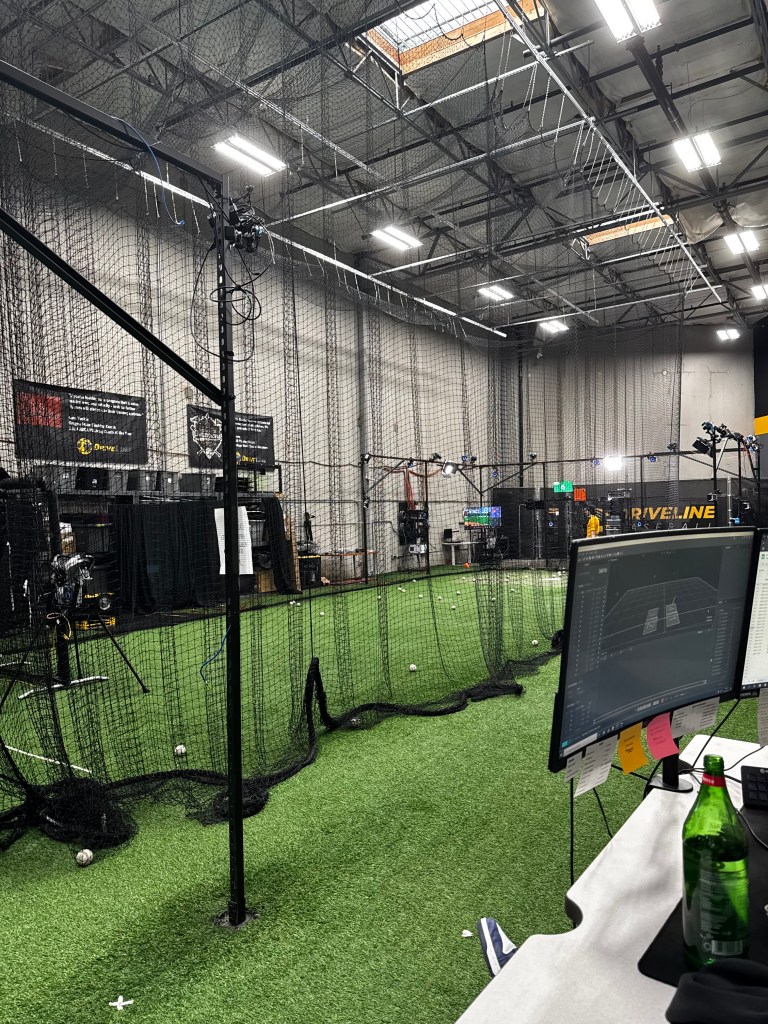
Driveline isn’t just a training facility—it’s a biomechanics research lab in a huge warehouse. Imagine if Batman was obsessed with baseball and had a 10,000-square-foot space to build the ultimate high-performance lab. Squat racks everywhere, hitting and pitching cages in every direction, high-tech force plates, pitching/swing design technology and, at the heart of it all, the motion capture lab.
The Sports Science division is responsible for running and refining the motion capture process, analyzing biomechanical data, and transforming it into actionable insights for trainers. Adam, as a CV Engineer, handled running assessments and building internal tools that made CV data collection and models more efficient. My role? Learn as much as humanly possible in three weeks.
Week 1: Learning the Ropes
My first week was all about absorbing information. I put in 30-40 hours shadowing Adam, learning how the mocap lab functioned, and researching biomechanics and Newtonian physics to build a foundation. Brice played a huge role here, constantly breaking down concepts for me and even assigning me homework.
I read Basics of Biomechanics by Susan B. Hall and Force: The Biomechanics of Training by Dan Cleather, both of which set the groundwork for what I was diving into. Huge shoutout to ChatGPT, the ability to have advanced voice chat to practice memory recall allowed me to absorb information extremely quickly. By the end of the week, I wasn’t just observing anymore. On Friday, I set up, calibrated, and ran my first assessments under Adam’s supervision.
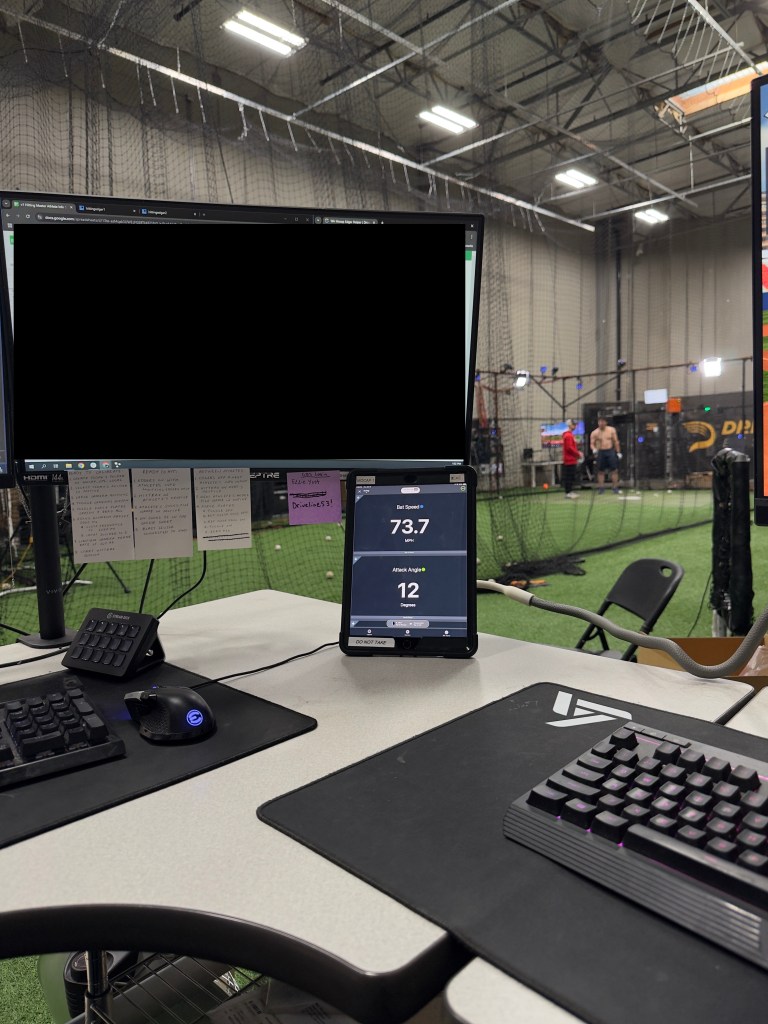
This was when I realized the real backbone of Driveline: the motion capture assessment. Every six weeks, athletes go through a fresh round of assessments. Two rounds of eight hits measure key metrics—exit velocity (EV), attack angle, bat speed, and more. But the real magic happens behind the scenes.
Motion capture data, outputted as .c3d files, is processed using a mix of marker-based and markerless methods, mainly infrared triangulation and 3D reconstruction using pose estimation. Sports Science Engineers then generate biomechanics reports detailing metrics like arm action, hip-shoulder separation, pelvic velocity, trunk rotation, and elbow angles. These insights would then inform the trainer of the athlete’s deficiencies and from there, more Driveline magic occurs as the trainers equipped with years and years of data-driven innovative training principles develop these athlete’s next block of training.
Week 2: Getting Minutes
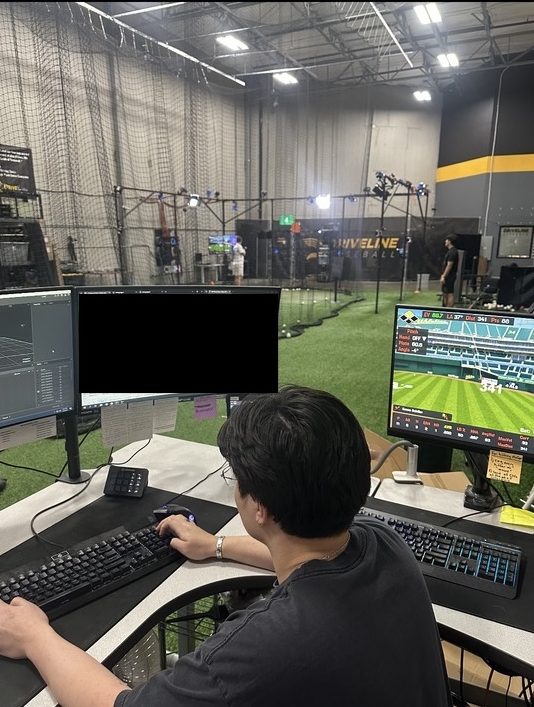
By week two, I wasn’t just watching—I was running the show. Adam let me take full control of assessments while he stepped back, only helping when necessary. I ran 30-40 assessments this week, working with MLB draft prospects, NPB players, and multiple minor leaguers.
I got comfortable with the entire assessment process—calibration, troubleshooting, and managing all the moving parts. Software like Motive, markerless motion capture with Edgertronic cameras, Bertec Force Plates, OptiTrack Cameras, HitTrax, and BLAST became second nature to me. I learned that running a motion capture lab is a lot like serving tables—you have to stay on top of everything, anticipate problems before they happen, and make sure the client (athlete) gets a seamless experience.
The biggest lesson this week? Don’t be afraid to mess up. Mistakes are part of the process, and I learned the most when things went wrong. By the end of the week, I felt confident enough to have started running the lab independently. I confidently handled common and even some unique troubleshooting issues on my own.
At the same time, I was learning CV in a sports context. I worked with the OBP database, took an OpenCV course, and started developing my own projects. My first project was a rep-counting web app that detects and analyzes squat form from a side-view camera. This built a solid foundation for my understanding of CV and pose estimation models, and I plan to expand on it with more projects.
Week 3: Finetuning the Details
The final week was about refining everything I had learned—especially the one thing that had been giving me hell: marker based calibration with a wand.
For some reason, waving a wand around to calibrate cameras was harder for me than picking up Newtonian physics, biomechanics, and running a motion capture lab combined. Adam had a few tricks up his sleeve, though, and by the end of the week, I finally cracked it.
By this point, I felt confident enough to have started running the lab independently. I wrapped up my time at Driveline with another 15-20 assessments, bringing my total to around 60. Every assessment, every mistake, every conversation helped sharpen my skills.
What I Took Away
This experience was different. It wasn’t just about gaining knowledge—it was about immersion. Driveline has a culture of relentless innovation. Everyone, from the trainers to the CTO, is pushing the boundaries of sports science. It’s fun, it’s intense, and when it’s time to get to work, everyone gets to work.
I walked away with:
- Hands-on experience running a motion capture lab
- A solid foundation in biomechanics, Newtonian physics, and human movement
- Applied knowledge in computer vision and pose estimation
- Familiarity with marker and markerless motion capture systems
- The ability to set up, calibrate, and troubleshoot mocap assessments
- A deeper appreciation for how science and data drive athlete development
What’s Next?
This experience solidified my passion for sports science, biomechanics, and computer vision. Right now, I’m:
- Deepening my knowledge in CV and pose estimation models (working through certifications)
- Building on my biomechanics foundation (more reading, more research)
- Developing new projects that apply CV to sports performance
- Looking for work! (If you’re reading this and have an opportunity, don’t be shy—reach out!)
Final Thoughts
Three weeks at Driveline taught me more than an entire quarter of college. This wasn’t just learning—it was doing. I stepped into one of the most innovative sports science labs in the world and left with a new skill set, new confidence, and a new level of curiosity for biomechanics and CV.
 Andrew Le
Leave a comment